Adding Rustic Charm: A Look at PNG Twine 1
You know that feeling when a digital design looks a little too… digital? Everything is perfectly aligned, the colors are crisp, but it lacks that tactile, human touch that makes a piece of art feel warm and inviting. It’s a common challenge in our screen-based world. We crave textures that remind us of handmade things, of nature, of a slower pace. That’s exactly where thoughtfully designed elements come into play, and why a collection like PNG Twine 1 can become a secret weapon in your creative toolkit. It’s not just about adding a random decoration; it’s about weaving a specific feeling of authenticity and craftsmanship directly into your work.
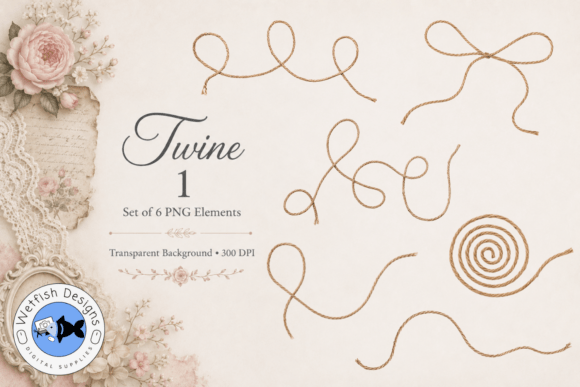
At its core, this set offers six distinct natural twine pieces, each with its own character. You’ll find twisted fiber textures that look as if they were just pulled from a spool, delicate loops and curls that add a sense of movement, and charming bow shapes that feel instantly familiar and welcoming. There are also winding accents perfect for creating a sense of organic flow. These aren’t static, flat lines. They have dimension and a subtle irregularity that mimics the beauty of real, hand-spun twine. The warm, natural color is intentionally neutral, allowing it to blend seamlessly into a wide array of project themes—from vintage and farmhouse to botanical, wedding, and shabby chic aesthetics. Because they’re provided as high-resolution PNGs with transparent backgrounds, they’re ready to drop into any project without the hassle of removing unwanted white boxes or dealing with jagged edges.
From Digital Files to Tangible Brand Stories
So, where do these rustic elements actually fit into your workflow? The applications are surprisingly broad. For small business owners and entrepreneurs, especially those in the handmade, artisanal, or lifestyle spaces, these twine accents can become a cornerstone of your visual identity. Imagine using a small twine bow as a recurring motif on your packaging labels, or a winding accent to frame the text on your website’s homepage. This kind of subtle, consistent use builds brand recognition. It tells a story about your brand’s values—attention to detail, warmth, and a connection to natural materials—before a customer even reads a single word.
For designers and content creators, the value lies in versatility. These elements are perfect for layering. Think about adding a delicate loop as a finishing touch on a social media graphic, creating a sense of depth and interest. Use a twisted piece to underline a quote in a blog post or to tie together a cluster of photos in a scrapbook-style digital layout. They’re ideal for creating custom journal cards, planner stickers, and tag designs that feel personal and curated. In editorial design, a subtle twine accent can separate sections of a magazine spread or add a rustic border to a photograph, enhancing the narrative without overwhelming the primary content.
Practical Integration for Cohesive Design
The real power of any design asset, including a set like PNG Twine 1, is in how it supports your overall project goals. It’s not about using every element on every page. It’s about strategic placement to enhance readability, guide the eye, and reinforce your message. For instance, using a thin, winding twine line as a subtle separator between blocks of text on a website can improve visual flow and make content feel more approachable than a stark horizontal rule. In a logo or brand mark, a single, well-placed bow or curl can add a touch of personality that makes the design memorable.
When incorporating these textures, consider your existing typography and color palette. The natural hue of the twine works beautifully with earthy tones, creams, and soft pastels, but it can also provide a warm contrast against darker, more dramatic backgrounds. Pair it with a classic serif font for a heritage feel, or with a clean sans-serif to let the rustic texture stand out as a deliberate contrast. The key is to let the twine serve as an accent, not the main event. It should complement your core message, whether that’s a product photo, a headline, or a call to action.
Expanding Your Creative Horizons
Beyond the obvious uses, think about how these elements can solve specific design problems. Need to make a digital invitation feel more special? A twine bow at the top adds instant charm. Creating a series of printable art? Incorporating a winding accent can unify the collection. Designing merchandise like tote bags or mugs? A simplified twine graphic can translate beautifully to physical products, maintaining that handcrafted aesthetic. For marketers, these textures can make promotional materials like posters, flyers, and email headers feel more organic and less corporate, which can be particularly effective for campaigns focused on sustainability, DIY, or community.
Ultimately, the goal is to create visuals that connect. In a landscape saturated with sterile, geometric graphics, the intentional use of a natural, tactile element like twine can be a powerful differentiator. It adds a layer of depth and storytelling that resonates on a human level. PNG Twine 1 provides a focused, high-quality set of tools to achieve that. By thoughtfully integrating these rustic pieces into your branding, social media, packaging, or personal projects, you’re not just decorating—you’re building a more engaging and authentic visual experience that people can feel.