Burgundy Rose Invitation Suite: Modern Elegance for Your Wedding
There's a particular moment when a wedding invitation stops being just a piece of paper and becomes the first chapter of your love story. It sets the tone, whispers the mood, and gives your guests a tangible glimpse into the day you've envisioned. If your vision leans towards timeless romance with a modern, sophisticated edge, finding the right design can feel like searching for a needle in a haystack. You want something that feels luxurious and personal, yet clean and contemporary—avoiding the overly ornate or the starkly minimal. This is the sweet spot where a design like the Burgundy Rose Invitation Suite Bd013 finds its home.
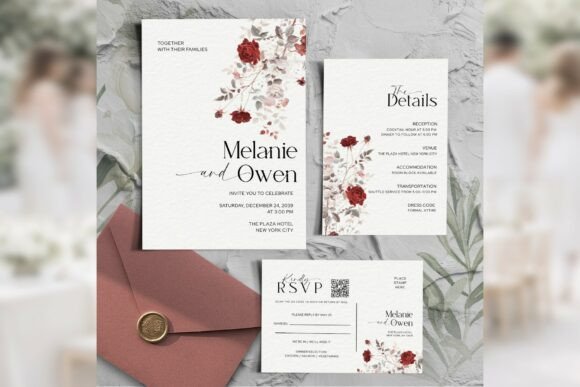
Imagine deep, watercolor burgundy roses, their petals rendered with artistic fluidity against a crisp, clean backdrop. Paired with refined typography and an editorial layout, this suite doesn't shout; it makes a confident, elegant statement. It’s for the couple who appreciates the weight of tradition but wants to present it through a thoroughly modern lens. The rich, romantic burgundy acts as a bold accent, providing depth and drama without overwhelming the senses. This isn't just a floral pattern; it's a curated aesthetic that communicates luxury, intention, and a keen eye for design from the very first envelope opening.
More Than an Invitation: A Complete Design Ecosystem
One of the most practical advantages of a cohesive invitation suite is its inherent versatility. The design language established in the main invitation—the specific shade of burgundy, the style of rose illustration, the typography hierarchy—becomes the foundation for a entire visual ecosystem. This is where the real value for a design-minded couple or even a creative professional emerges. Think of the Burgundy Rose suite not as a single product, but as a premium font and design asset kit for your entire wedding brand identity.
The included elements—a main card, details card, RSVP, and back designs—provide the core stationery. But the real magic happens when you extend this visual system. Use the floral motifs and color palette to design cohesive social media graphics for your wedding hashtag or engagement announcement. The elegant typography can inspire the look of your wedding website, ensuring a seamless transition from paper to screen. For the DIY-inclined, these assets can be adapted for printed materials like menus, programs, and table numbers, creating a unified guest experience. The design’s strength lies in its clean layouts, which make it exceptionally adaptable for various applications without losing its core identity.
The Practical Power of Editable Design Templates
The modern approach to wedding stationery, and indeed to many design projects, hinges on accessibility and control. A fully editable Canva template like this suite represents a significant shift. It democratizes design, putting professional-grade aesthetics into the hands of anyone willing to learn a few simple clicks. You don't need to master complex software or hire a designer for basic customizations. The template’s structure is built for clarity: you open it, replace the placeholder text with your details, and if desired, adjust colors or swap elements. The included PDF guide is a smart touch, acknowledging that even simple tools benefit from a quick orientation.
This model has profound implications beyond wedding invitations. For small business owners, content creators, and marketers, it demonstrates a powerful workflow. Imagine needing a series of Instagram posts, a flyer for a pop-up shop, or an email header that aligns with your brand. Instead of starting from scratch or paying for each asset individually, a template-based system allows you to maintain visual consistency across dozens of assets quickly and affordably. The principle is the same: establish a strong visual core (the burgundy roses, the elegant typography) and apply it flexibly across different formats and sizes. This is how modern brands maintain a professional presentation without exhausting their budget or time.
Crafting Your Narrative with Typography and Color
Let's delve into the specific design choices that make this suite work so effectively, as understanding these principles is invaluable for any branding or marketing project. The typography here is key. It likely pairs a refined serif font for headlines—conveying tradition and elegance—with a clean sans-serif for body text, ensuring modern readability. This is a classic, effective font pairing strategy. The serif adds personality and weight to names and titles, while the sans-serif keeps logistical details clear and easy to scan. When choosing fonts for your own projects, whether for a logo design, packaging, or editorial layouts, this contrast between display type and functional type is a fundamental tool for creating hierarchy and guiding the viewer's eye.
Color psychology is at play, too. Burgundy is a color of depth, sophistication, and passion. Used as an accent in the watercolor roses, it provides a focal point of romance and luxury without the formality of pure red or the casualness of pink. In your own branding or design assets, using a bold, saturated color as an accent against a neutral background (like the suite’s clean whites and creams) is a reliable way to make a statement. It ensures your materials feel both elevated and approachable. Consider how you might use this principle for product packaging, a website hero section, or a standout poster to capture attention while maintaining a professional demeanor.
Extending the Aesthetic: From Wedding to Brand
While born for weddings, the aesthetic principles of the Burgundy Rose Invitation Suite have broad applications. Its blend of organic floral elements with structured, minimal design is a powerful combination in contemporary branding. Think of a boutique hotel's collateral, a luxury skincare line's packaging, or a high-end florist's marketing materials. The style communicates care, quality, and a touch of romantic indulgence.
For a creative entrepreneur or blogger, these assets could be repurposed for digital products. Imagine a series of printable art quotes using the same floral accents and typography, sold on Etsy. Or use the motifs to create branded social media templates for a consistent Instagram feed. The key is to extract the core components—the color palette, the illustration style, the typographic feel—and apply them to your specific context. This approach to design assets ensures your projects feel cohesive and professionally curated, building brand recognition through consistent visual language. It’s about understanding the recipe, not just following one specific instruction.
Ultimately, a design like this suite is a toolkit for visual storytelling. It provides a sophisticated starting point that can be tailored to reflect a personal narrative, whether that's the story of a wedding day or the story of a brand. The ease of the Canva template model means the barrier between having a vision and executing it has never been lower. It invites you to engage with the design process, to make choices about what to keep and what to change, resulting in a final product that is authentically yours. In a world saturated with generic templates, the ability to start with a foundation of such elegant, thoughtful design and then make it uniquely your own is an invaluable resource for anyone looking to communicate with style and clarity.